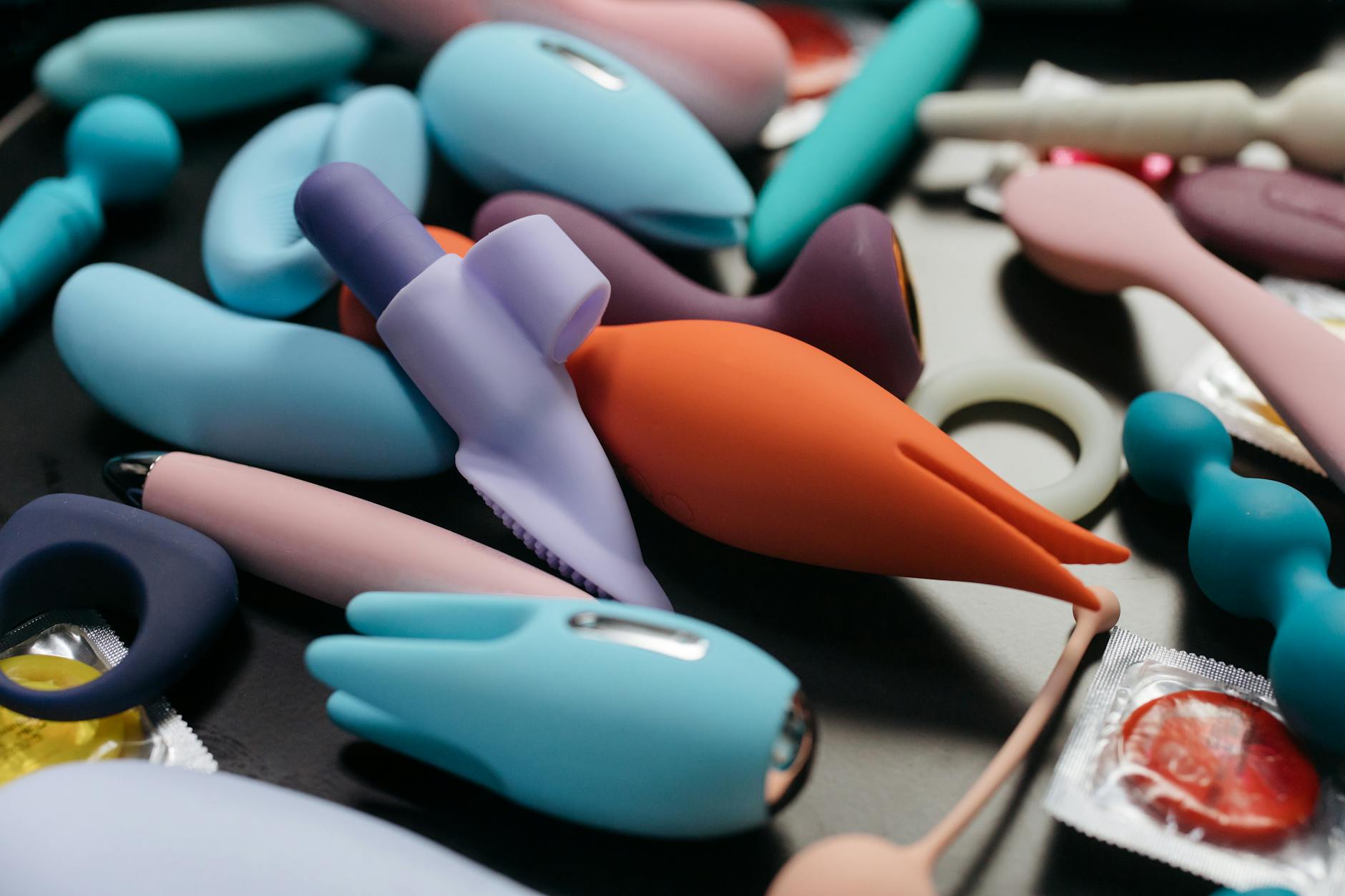
Your lemon clitoral vibrator used to feel incredible. Now it feels like you're barely feeling anything. Is the toy failing or is something else happening?
You bought your lemon vibrator months ago. It was incredible. Electric. Worth every penny. And then somewhere between month three and month six, something shifted. It still works. The motor still runs. But the intensity? It feels like it's gone missing.
Honestly, this is one of the most common questions I get, and people assume they're broken or defective. Almost nobody's broken. What's happening is something your body does brilliantly and frustratingly well.
Your nervous system is obsessed with novelty. When you first use your lemon vibrator, your brain is flooded with new sensory information. The suction sensation, the rhythm, the pressure. All of it fires up neural pathways like crazy.
But your brain is also efficient. Over time, repeated stimulation causes something called sensory adaptation. Your nerves literally reduce their firing rate when they get the same signal over and over. It's not weakness in the toy. It's your body doing exactly what it's supposed to do.
This happens with every repeated stimulus. Wear a watch long enough and you stop feeling it on your wrist. Sit in the same room for hours and you stop noticing the ambient noise. Your sensory system is constantly asking itself, "Is this thing important? Is it a threat? Is it new information?" When the answer is consistently no, it turns the volume down.
Clitoral suction toys like your Hello Nancy lem vibrator work differently than traditional vibrators. Instead of rapid mechanical vibration, they use rhythmic pressure waves that mimic a specific sensation. This focused, consistent pattern of stimulation actually makes habituation happen more predictably.
Traditional vibrators scatter stimulation across a wider area with variable intensity. Suction toys concentrate the signal. Your nervous system notices concentrated, repetitive signals faster and adapts to them more completely. That's not a flaw in the design. That's exactly why they work so well initially. The same precision that makes them magical at first makes them more prone to habituation.
A toy that's genuinely failing will show other signs: the motor makes weird sounds, it won't hold a charge, the suction doesn't create a seal anymore, or it stops turning on entirely. That's hardware degradation.
What you're describing, intensity that feels lower, is usually adaptation, not degradation. If your lem vibrator still charges, still seals, still runs, it's almost certainly working exactly as it did on day one. Your nervous system has just learned to filter it out.
Here's the counterintuitive part. The solution isn't a new toy. It's strategic disuse.
Take a break. Two to four weeks off from your usual toy resets habituation remarkably fast. I know that sounds terrible, but neuroplasticity works both directions. When you stop the stimulus, your nervous system slowly turns the volume back up. Four weeks feels long. But the resensitization that happens on week five is usually extraordinary.
You don't have to stop masturbating. Switch to a different toy, use your hands, try a different sensation altogether. The goal is to give your lemon vibrator a break from your particular nervous system.
Rotate your patterns. If you use the same setting every time, try switching. If you've been using pattern three, explore pattern one for a week. Use a different rhythm length. Move the toy slightly differently across the clitoris. Your nervous system is paying attention to the full sensory picture, not just the toy. Changing the context changes what gets adapted.
Change your approach. Start slower. Use it later in arousal rather than early. Build up to your usual intensity instead of jumping straight there. This slows down the adaptation process and re-engages the novelty pathways in your brain.
A lemon suction vibrator's motor can wear down eventually, but it usually takes years of weekly use. Check these signs of actual hardware failure:
Does the seal feel weaker when you attach it? Real suction is the backbone of the sensation. If the motor runs but suction doesn't form, something mechanical has shifted.
Does it charge but die faster than it used to? A battery losing capacity is a sign of age, not adaptation.
Does the motor sound different? A struggling motor develops a rattling or grinding sound you can hear or feel.
If none of these apply, your toy is fine. Your nervous system is doing its job.
Here's something interesting. A lot of people notice intensity seems lower when they're using the toy alone versus with a partner. This isn't because the toy changed. It's because context changes how your nervous system registers sensation.
When you're with a partner, you're processing multiple simultaneous inputs: touch, proximity, conversation, anticipation. Your brain is less able to habituate to one sensation when it's managing several. When you're alone, the clitoral vibrator becomes the only stimulus, making adaptation faster.
If you've been using your lemon vibrator mostly solo and want to refresh the feeling, using it with a partner during foreplay can genuinely make it feel more intense. Not because the toy changed. Because your nervous system is handling more input.
Honestly, sensory adaptation is partly why long-term partnerships work better with intention. Your nervous system naturally habituates to the same partner, the same routine, the same sensation. This is why spontaneity matters. Why variation matters. Why trying new things together matters.
It's not that your partner or your toy is boring. It's that your nervous system is too efficient. The solution is always the same: bring back novelty, take strategic breaks, change the context.
The good news: your lemon vibrator isn't dying. And your body isn't broken. You're just experiencing what every nervous system does beautifully. The trick is knowing how to work with it.
Your toy probably isn't weaker. Sensory adaptation is when your nervous system reduces response to repeated stimuli. Clitoral suction vibrators create focused, consistent stimulation that your brain adapts to faster than scattered vibration patterns. It's neurology, not hardware failure. A two to four week break usually resets the sensation dramatically.
Absolutely. Take a break for two to four weeks, switch to different patterns or rhythms, or rotate with a different toy. You can also change the context: use it with a partner instead of solo, use it later in arousal rather than early, or start at lower settings and build up. Each of these slows habituation or resets it entirely.
Not at all. Adaptation is how healthy nervous systems work. It's actually a sign that you're using the toy regularly and consistently, which is a good thing. The issue isn't wrong use. It's normal neurobiology. Changing up your approach is the solution.
Check whether the physical function still works: Does it charge fully? Does it hold a charge as long as it used to? Does the suction seal properly to the clitoris? Does the motor run without strange sounds? If all of those are yes, the toy is fine. Sensation loss without hardware changes is almost always adaptation, not failure.
Yes. Suction toys concentrate stimulation intensely in one area with a consistent pressure pattern. Your nervous system notices this repetitive, focused signal faster than scattered vibration. This is why Hello Nancy lemon vibrators feel so incredible initially and why adaptation can happen more predictably. It's not a weakness. It's how the technology works.
A two to four week break is most effective. Your nervous system actually increases sensitivity when the stimulus is removed. Shorter breaks help, but longer ones reset more thoroughly. If you don't want to stop using toys entirely, switch to a completely different toy with a different sensation type. Variety genuinely extends the lifespan of pleasure you get from any single toy.