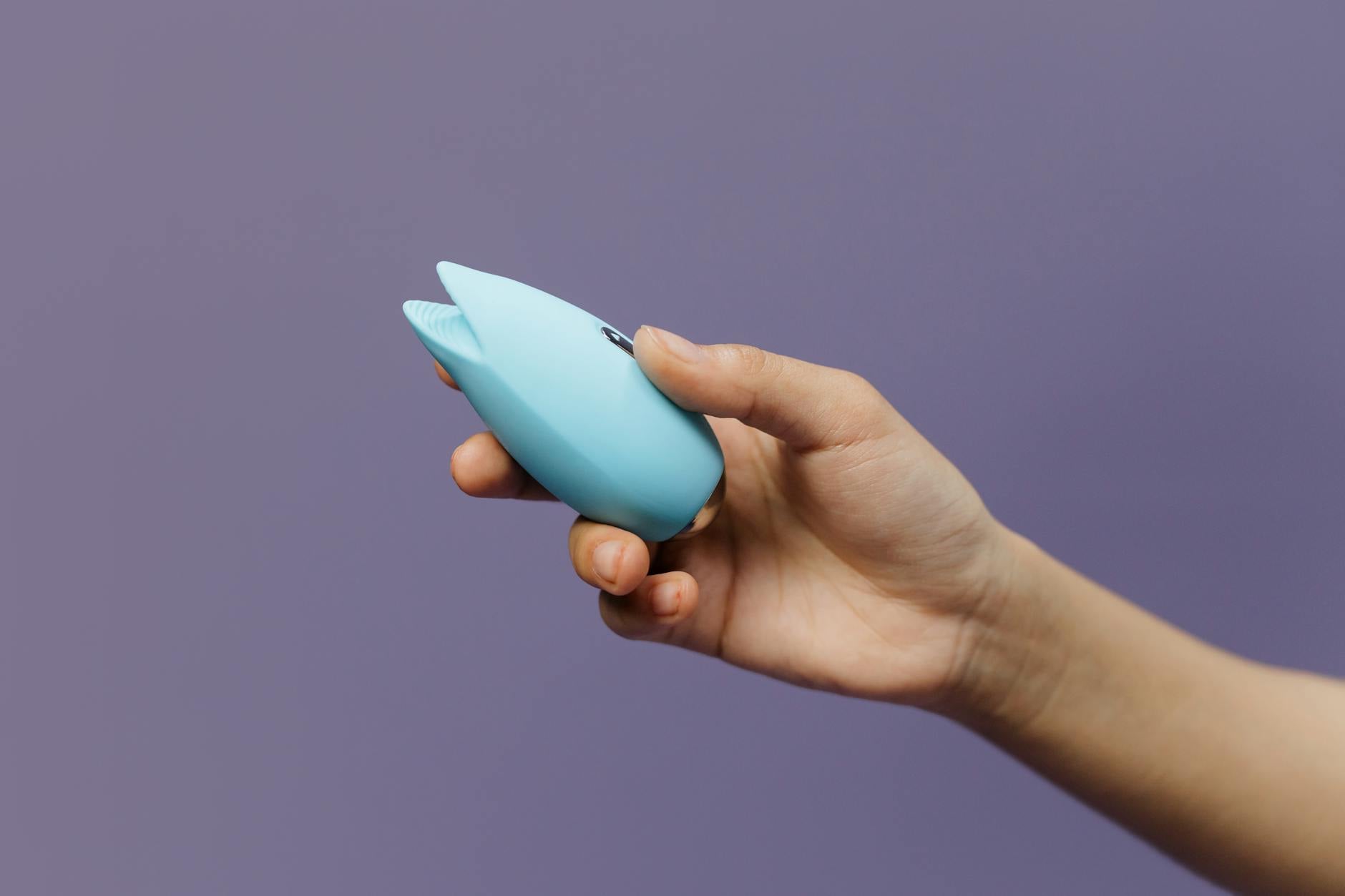
How Lemon Vibrators Compare to Traditional Vibrators for Clitoral Sensitivity
Suction and vibration feel wildly different on sensitive tissue. Here's what each one does, why lemon vibrators might be gentler on your body, and how to know which approach is right for you.
Let me be direct. Traditional vibrators shake. Lemon clitoral vibrators use suction. That single distinction changes everything about how the sensation travels through your tissue, which nerve endings light up first, and what your body feels like the day after.
Most people have never thought about this difference because "vibrator" became the umbrella term for any toy that creates sensation. But the mechanics are entirely different, and if you've ever felt uncomfortable with traditional vibrators or found yourself going numb during longer sessions, understanding why matters.
A traditional vibrator creates rapid back-and-forth movement. The motor oscillates at a fixed frequency, usually between 40 and 100 Hz (that's oscillations per second). This consistent shaking stimulates nerve endings through direct contact and friction.
Here's what happens to your tissue: the constant micro-movements create sustained pressure. For some people, this feels incredible. For others, particularly those with sensitive skin or previous injury, the sustained friction can feel too sharp, too numbing, or too much.
The problem compounds over time. The more you use a traditional vibrator, the more your nerve endings adapt to that frequency. You need higher intensity to feel the same effect. Some people report that after months or years of traditional vibrators, they struggle to orgasm with a partner because their tissue has essentially been trained to recognize only that specific pattern.
Lemon sexual toys, like the Lemon Clitoral Vibrator, use a completely different mechanism. Instead of shaking, they create gentle suction around the clitoris. The sensation mimics oral stimulation without the tongue, and the mechanics are much gentler on sensitive tissue.
With suction, there's no friction. Instead, there's a rhythmic pulling sensation that stimulates a different set of nerve endings than vibration does. The clitoris has thousands of nerve endings, but they're not all activated by the same type of input. Suction activates nerves in the outer tissues and the surrounding area, while vibration goes deeper and more direct.
Because suction doesn't rely on friction, it's significantly gentler on thinner or more delicate tissue. If you've experienced irritation, rawness, or oversensitivity with traditional vibrators, a lemon sucker often feels completely different. Not less intense, necessarily. Just less abrasive.
Here's something nobody talks about clearly: numbness after use. If you finish a 20-minute session with a traditional vibrator and your clitoris feels tingly or numb for hours, that's a sign of overstimulation. Your nerve endings have been activated so intensely and for so long that they've essentially shut down temporarily.
With suction-based lemon vibrators, this happens far less frequently. Because the sensation is broader and less direct, you're less likely to overstimulate a single point. Many people find they can have longer sessions without that post-play numbness, and more importantly, they can have multiple orgasms without needing recovery time in between.
If you've struggled with clitoral sensitivity in the past, the difference between these two approaches can be the difference between painful overstimulation and genuinely restorative pleasure.
Let's talk about what happens to your tissue after using each type of toy. Traditional vibrators create a kind of compression effect. The constant shaking can lead to temporary swelling, which is why some people notice their clitoris feels slightly larger or more sensitive immediately after use.
This isn't dangerous, but it does mean you're potentially creating micro-trauma that your body has to repair. If you're someone with dermatitis, eczema, or any kind of skin sensitivity, this matters. The repeated micro-trauma can trigger inflammatory responses that traditional vibrators can amplify.
Lemon clitoral vibrators create a very different tissue response. Suction actually increases blood flow in a gentler way, and because there's no friction, there's minimal risk of micro-tears or swelling. People with sensitive skin often report that lemon suckers feel easier on their body, and they can use them more frequently without irritation.
This is particularly important if you're recovering from anything, whether that's a pelvic floor injury, a yeast infection, or just generalized sensitivity. When you're healing, suction-based lemon sexual toys are often the better choice.
Here's where a lot of people get confused. "Gentler" doesn't mean "weaker." A lemon vibrator can be just as intense as a traditional vibrator. The difference is in how that intensity is delivered.
With a traditional vibrator, intensity increases through speed. Higher frequency vibrations feel stronger. With lemon vibrators, intensity comes from suction strength. A stronger suction pull can feel incredibly intense, sometimes even more so than a traditional vibrator at maximum speed.
The advantage? You have more granular control. Many lemon clitoral vibrators let you adjust suction intensity independently from pulse patterns. That means you can have a gentle suction rhythm that's still deeply satisfying, or a strong suction rhythm if you want something more intense. Traditional vibrators give you fewer options. You're mostly choosing between "on" and "faster."
Not everyone will notice a dramatic difference between traditional vibrators and lemon vibrators. But certain people absolutely will.
You're more likely to feel a significant difference if you have sensitive skin, if you've experienced numbness or overstimulation with traditional vibrators, if you're recovering from any kind of pelvic floor issue, or if you've been using traditional vibrators so long that you feel like nothing works anymore. You might also feel it if you're over 40 and noticing that your tissue is responding differently than it used to.
If you've never experienced discomfort with traditional vibrators and you get exactly what you need from them, a lemon sucker might just feel different, not necessarily better. And that's fine. Not every innovation is a universal upgrade. But if there's been friction (literally or figuratively) with traditional toys, lemon vibrators often feel like a revelation.
Your clitoris isn't just the small external bump you can see. It's a complex structure that extends internally, with sensitive tissue that reaches deeper into your body. Traditional vibrators primarily stimulate the external part through friction and pressure.
Suction, by contrast, creates a broader field of stimulation. It pulls gently on the entire external area and the tissues around it. This activates more nerve endings across a wider area, which many people describe as feeling more "full" or "complete."
There's also a psychological component. Suction mimics oral stimulation in a way that vibration doesn't. If you love receiving oral sex, suction-based lemon vibrators often feel more like that experience than traditional vibrators do. That sense of familiarity and pleasure association can actually deepen your physical response.
If you've been using traditional vibrators for years and you're curious about trying a lemon clitoral vibrator, here's what to expect. The sensation will feel completely foreign at first. That's not bad. It just means your body is recognizing something new.
Start at the lowest suction setting. Let yourself explore for just 5 or 10 minutes. Your clitoris will respond differently than it does to traditional vibration, and that can feel confusing if you're expecting the familiar buzz.
Many people need two or three sessions before their body really understands what suction is doing. Then something clicks, and the sensation becomes absolutely addictive. You might find yourself reaching for the lemon vibrator more often because it feels less exhausting and more sustainable than traditional vibrators ever did.
If you're transitioning from traditional vibrators because of sensitivity issues or numbness, give yourself at least a week of using only the lemon sucker before you compare. Your tissue needs time to recover and to learn this new type of stimulation.
No. If traditional vibrators work great for you and you have no sensitivity issues, there's no reason to switch. But if you've experienced numbness, irritation, or that feeling of needing more and more intensity to feel anything, a lemon clitoral vibrator often makes a dramatic difference. Many people end up using both, depending on what they're in the mood for.
It's much less common because suction distributes stimulation across a wider area rather than concentrating it on one point. That said, if you use any toy intensely for a very long time, some temporary numbness can happen. But most people find they can use lemon vibrators for much longer sessions without that effect.
Typically three to five sessions. Some people feel it immediately, others need their body to adjust. The sensation is quite different, so don't judge it too quickly. Give it at least a week before deciding it's not for you.
Almost certainly. The lack of friction makes suction-based lemon sexual toys dramatically more comfortable for people with skin sensitivities. That said, you'll still want to use plenty of lubricant and start at the gentlest setting. And if you have active flares, it's worth checking with your doctor before using any toy.
Not really, because they're designed to do different things. Some people use both in the same session or on different days, depending on what their body needs. If you're looking to transition fully from traditional vibrators to lemon vibrators, expect a short adjustment period, but many people find they prefer lemon suckers for everyday use.
If you're curious about whether a lemon vibrator might work better for your body, the easiest thing to do is start with a single session. Set aside 15 minutes with the lowest suction setting, be patient with the unfamiliar sensation, and notice what your body actually feels.
You might discover that suction is exactly what you've been looking for. Or you might find that traditional vibrators are still your preference. Either way, you'll have actual information instead of assumptions. That matters. Your pleasure matters, and it deserves to be based on what actually works for your body, not on what worked for someone else.
If you have questions about which approach might be better for your specific situation, reach out at /contact. We're here to help you figure out what feels right.