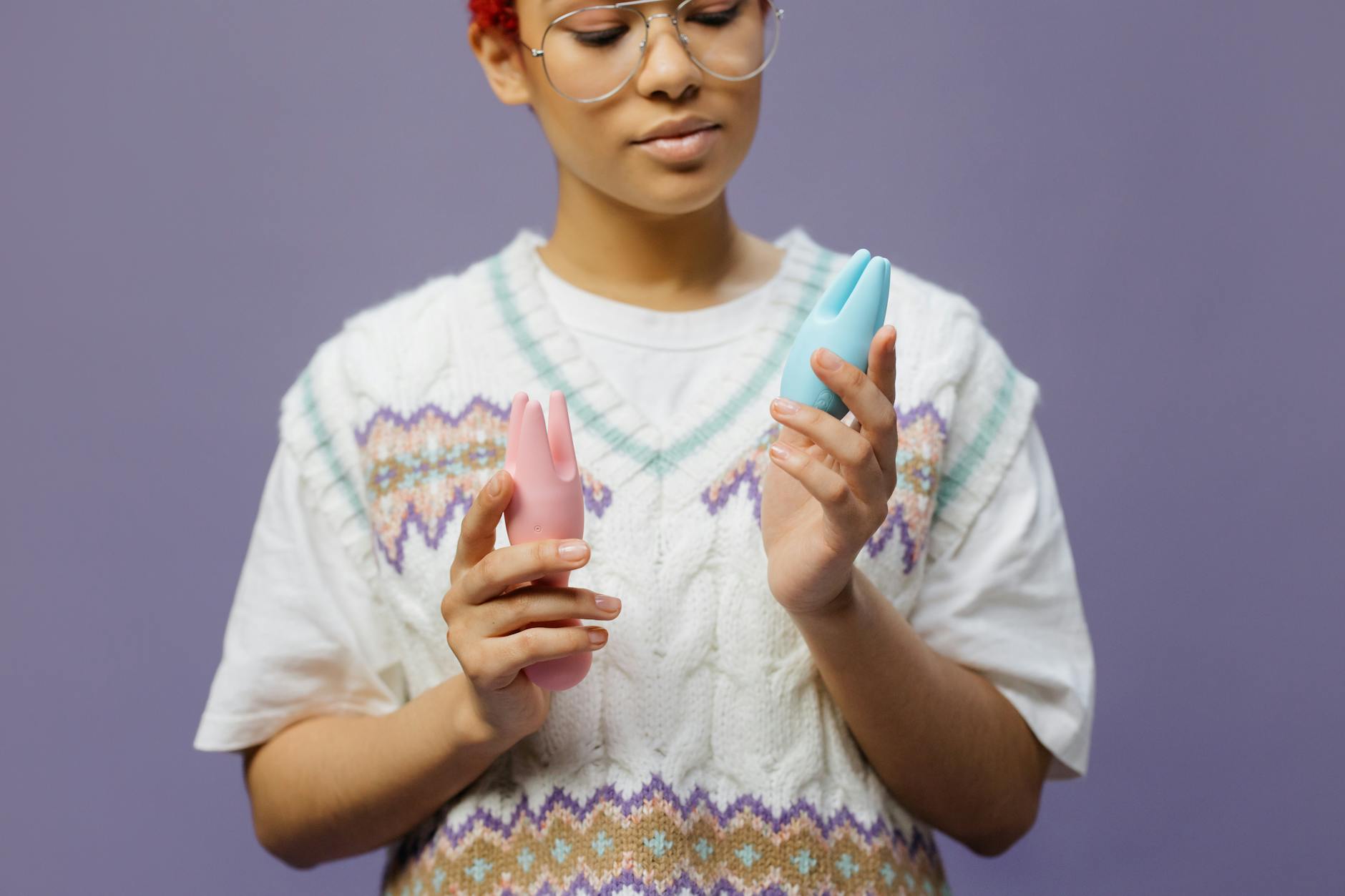
Introducing a lemon vibrator to your partnership feels risky because vulnerability feels risky. But here's what I've watched happen in my practice for twenty years: the couples who have this conversation end up with better sex and stronger trust. Not because the toy itself is magic. Because the conversation forces honesty about what actually feels good.
Let's get real. Most people have never told their partner what they actually need to orgasm. A lemon clitoral vibrator makes that impossible to avoid. And that's the whole point.
Your partner is not threatened by the toy. Your partner is worried they've failed you, or that you don't want them anymore. That's the real anxiety underneath. So the conversation isn't about the vibrator. It's about telling your partner: "I want more pleasure in our sex life, and I trust you enough to explore it together."
That reframe changes everything.
Research on couples who integrate toys into partnered sex shows consistent increases in sexual satisfaction, communication, and reported emotional intimacy. Why? Because saying "I want this" out loud is an act of intimacy. Acting on it together builds a shared erotic language you didn't have before.
A lemon vibrator isn't a replacement. It's an addition. And additions require conversation. The conversation is the whole value.
Honestly, the best opener is simple and direct. Try one of these:
"I've been thinking about ways to make our sex life feel fresher for both of us. I want to try using a vibrator together. I think it could be fun."
Or: "I've never orgasmed from penetration alone, and I think I want to try something that might help. I'd love if you'd be part of exploring it."
Or: "I read about lemon vibrators and I'm curious. Would you be willing to try one together?"
Three things these all do: they're direct, they frame the toy as something you want to explore together (not instead of them), and they don't apologize. You're not asking permission. You're inviting partnership.
Timing matters. Have this conversation outside the bedroom, when you're both awake and not rushed. Saturday morning coffee. Tuesday night on the couch. Not when clothes are already off. Not when you're tired or stressed.
Your partner might feel one or more of these things, in sequence or simultaneously: threatened, relieved, embarrassed, curious, excited, inadequate, turned on. All of these are normal. None of them mean you've made a mistake.
If your partner says "I'm worried you need this because I'm not enough," the answer is: "I need this because my body works a certain way. You being part of discovering that together makes me want you more, not less."
If your partner says "I don't want a toy involved," that's information, not rejection. Then you have a different conversation: "What would feel better to you?" Maybe it's not the toy itself they object to. Maybe it's that they want to buy it together. Maybe they want to understand how it works first. Listen without defending.
Here's what I tell couples: go slow, prioritize comfort, and treat the first time as an experiment, not a test.
Set expectations beforehand. Say something like: "I want to just play around with this and see what feels good. I might not orgasm the first time, and that's fine. I just want to explore it together."
Start with your partner watching, or touching you while you use it. The lemon vibrator's quiet design means you can talk through the experience without shouting over vibration. This feedback loop is crucial. "That feels good right there." "Try moving it slowly." "Can you hold me while I use it?"
Let your partner operate it if you want. Or keep control. This is your pleasure. You get to decide. What matters is that your partner is involved and engaged.
Your partner might go quiet during sex after you introduce a vibrator. This usually means one of four things: they're focused and enjoying watching you, they're processing something emotionally, they're wondering if they're doing something wrong, or they're bored and checking out. Only one of these is a real problem.
After sex, check in. "I loved that. Thank you for being part of it. How did that feel for you?" This simple question opens the door for them to voice any doubt or excitement they couldn't express during.
You might also feel insecure. Maybe you're worried they're thinking about someone else while watching you use the toy. Maybe you're nervous about your body being visible in a new way. All of this is normal. And all of it is worth saying out loud. "I feel a little vulnerable trying this. Can you tell me what you're thinking?" Vulnerability invites vulnerability. That's how trust deepens.
After the first time, you'll know whether this works for both of you. Some couples use a lemon vibrator every time they have sex. Some use it occasionally. Some realize it's not for them, and that's fine too.
What matters is that you've opened a door to talking about pleasure honestly. That conversation doesn't close. You can ask for different things. Your partner can suggest variations. The lemon clitoral vibrator becomes just one tool in a broader language of intimacy you're building together.
Many couples find that introducing a toy together also makes it easier to ask for other things. "I want more foreplay." "Can we try a different position?" "I want you to touch me there." Once you've had the vulnerable conversation about wanting vibration, asking for other adjustments feels smaller by comparison.
Some partners say no. Not "let me think about it." No.
Listen to why. Sometimes it's genuine discomfort with toys. Sometimes it's religious or cultural. Sometimes they've had a bad experience before. Sometimes they're scared. All of those reasons deserve respect.
You then get to decide: Can you accept not using a vibrator in partnered sex? Can you use it alone? Can you compromise on something else that opens up pleasure? These are real choices, not tricks.
What you can't do is pressure someone into participating in sex in a way they've said no to. That's not intimacy. That's violation.
What you also can't do is sacrifice your own pleasure indefinitely to avoid discomfort in your partnership. If someone refuses to engage with your needs at all, that's a different conversation. One worth having with a couples therapist. Which is not weakness. It's wisdom.
Once you've had this conversation well, it becomes a template for other conversations. "I want to try something different sexually." "This isn't working for me anymore." "I've been thinking about what would feel better." These become easier to say because you've already practiced the hardest version.
That's the real magic of introducing a lemon vibrator with your partner. It's not about the toy. It's about learning to ask for what you need without shame, and learning to listen to what your partner needs without defensiveness. Everything else follows from there.
If you're ready to have this conversation but want more grounding in how couples actually navigate pleasure changes over time, consider exploring resources on why lemon vibrators feel different after thirty. Understanding your own body's changes first makes the partnership conversation even stronger.
Frame it as a "we" exploration, not a "you failed" conversation. Say something like: "I want to explore this together because I trust you" rather than "I need this because you're not enough." The emotional core matters more than exact wording. Your partner will believe you if your behavior backs it up.
You get to set the pace. "I want to get comfortable using it myself first, and then we can explore that" is a complete sentence. Good partners respect boundaries. If yours doesn't, that's information about the partnership that's worth examining with a professional.
Technically yes. Emotionally unwise. Surprise toys often land as betrayal or pressure, even when that's not the intent. The conversation doesn't have to be formal or long, but it needs to happen before clothes come off.
It might make them feel insecure. That's not the same as emasculation. Insecurity is temporary and treatable with communication. If someone's self-worth is that fragile that a toy threatens it, that's worth examining separately. A healthy partner's confidence isn't damaged by tools.
This is a normal negotiation. "I want to use it every time," versus "I want to use it once a week" is a logistics conversation, not a values conflict. You compromise. You take turns. You talk about what the frequency means to each of you (is it about pleasure? About novelty? About avoiding something?). Then you decide together.
If you're having better conversations about pleasure, feeling more connected, and both wanting to try new things, it's working. If the toy is the only thing keeping sex interesting, or if it's replacing actual intimacy and communication, that's a different issue. A toy can't fix a broken partnership. But it can deepen a healthy one. Know the difference.
I've never had a couple regret having the vulnerable talk about what they need sexually. I've had many regret avoiding it. The couples who thrive are the ones willing to say "I want more" out loud, and willing to listen when their partner does the same.
A lemon vibrator is just the catalyst. The real transformation is learning to ask. And learning to listen. Everything else builds from there.
If you want to dig deeper into how your body's pleasure preferences shift over time and how to communicate those shifts to your partner, our guide to choosing the right lemon vibrator for your body type covers that terrain in detail. Partnership conversations are stronger when both people understand their own needs first.