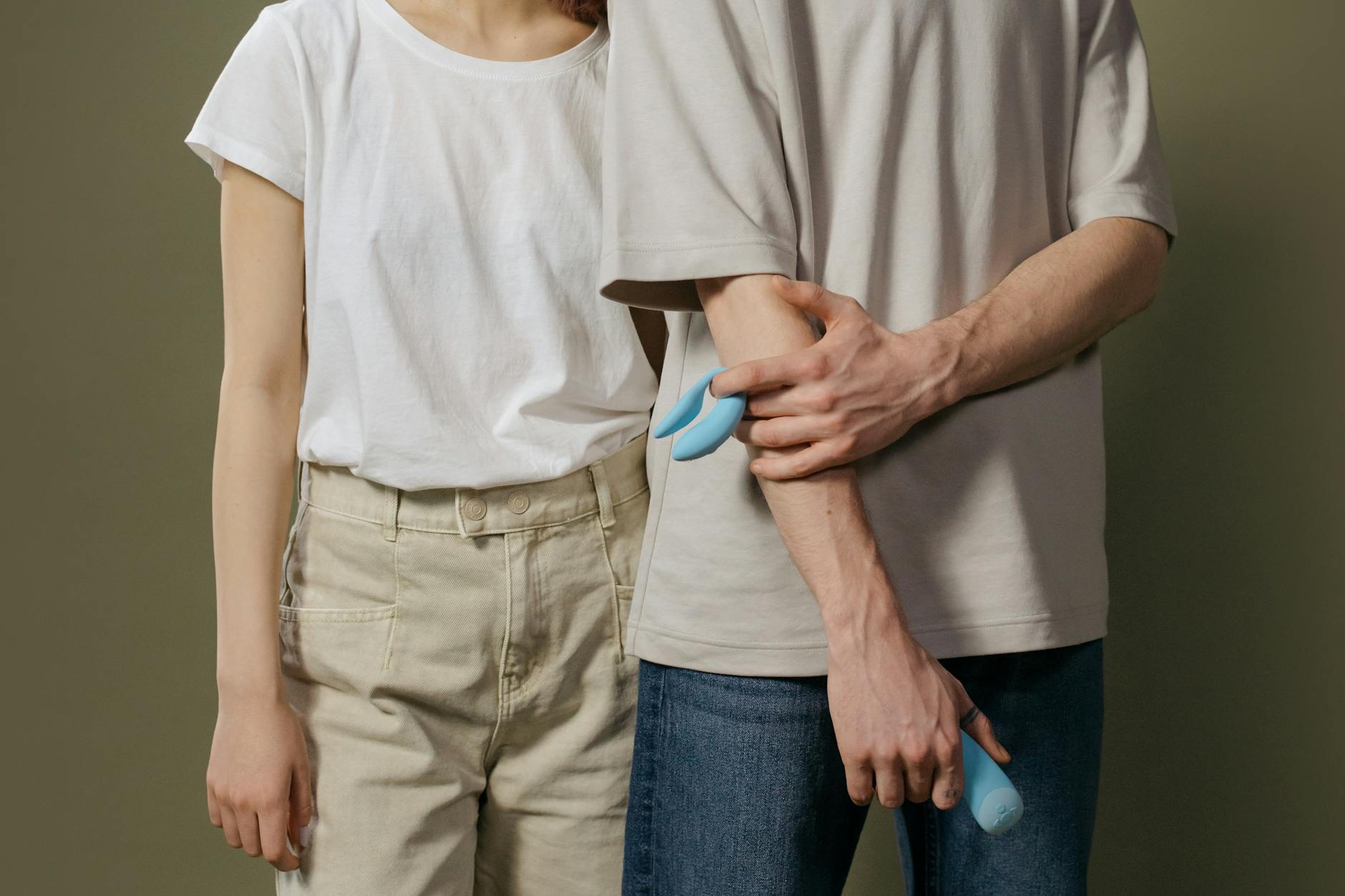
When their touch stops feeling good
Let's be real. There's a specific kind of intimacy crisis that nobody prepares you for. Your partner reaches for you, and instead of desire, you feel dread. Or numbness. Or worse, actual pain. It's not that you've stopped loving them. It's that their touch, which once felt amazing, now triggers overstimulation, sensitivity spikes, or something you can't quite name but your nervous system recognizes immediately as "no."
This happens more often than relationship advice acknowledges. Trauma responses, anxiety disorders, sensory processing differences, vulvodynia, nerve damage from past injuries, or plain old desensitization can all flip the switch. And when it happens, couples often freeze. They interpret the rejection as relationship failure instead of what it actually is: a signal that pleasure needs a different delivery system right now.
Here's what I know from two decades of working with couples: lemon clitoral vibrators, particularly suction-based devices, can be the bridge that gets you back to yes. Not as a Band-Aid on the relationship problem, but as a tool that lets you rediscover what feels good without your partner's well-meaning touch triggering the response you're trying to heal.
Why direct touch becomes too much
Three mechanisms usually underlie this shift.
First: your nervous system is in protection mode. Trauma, chronic stress, or anxiety rewires the vagus nerve so that direct pressure feels threatening rather than pleasurable. The clitoris has thousands of nerve endings. When your system is dysregulated, those nerves fire in unpredictable ways. What felt exquisite last year now feels like static electricity or sharp pressure. Your body isn't broken. It's being protective.
Second: numbness from repetitive stimulation. If you've spent years with the same partner using the same technique in the same rhythm, the nerve endings can desensitize. Neuroplasticity works both ways. The repetition that once felt good becomes almost invisible to your nervous system. You want to feel something, but you've trained your body to ignore this particular signal.
Third: actual medical sensitivities. Vulvodynia, neuropathy, residual pelvic floor tension from previous injuries, or allergic responses to friction can all make direct touch genuinely painful rather than pleasurable. These aren't psychological. They're neural inflammation or structural. And they're often worse after sex or during certain parts of your cycle.
Whatever the cause, the solution is the same: you need a stimulus that's different enough from your partner's hand to reset how your nervous system responds, but controlled enough that you're calling the shots.
How lemon suction vibrators change the game
Lemon vibrators work differently than traditional vibrators because they use suction instead of pure vibration. The sensation is broader, less direct, and less dependent on repetitive friction. Here's why that matters when touch feels too intense.
A partner's fingers create point pressure and friction. Your nervous system has learned to brace against that feeling. A lemon clitoral vibrator using suction creates a gentler, wider stimulation that pulls tissue slightly rather than rubs it. To your nervous system, it registers as a completely different signal. It's novel. It's not what triggered the problem in the first place.
You also control the intensity, the rhythm, the duration, and the pause. Your partner can't accidentally go too hard because you're holding the device. You can start at pattern 1 and spend twenty minutes just exploring what pattern 3 feels like before moving on. That agency matters. Pleasure that you're directing toward yourself, not receiving passively while braced for discomfort, rewires your associations much faster.
The solo foundation
Before involving your partner again, you need solo play time to remember what pleasure without tension feels like.
Set aside thirty minutes when you're alone, rested, and not expecting anything from the experience. No goal. No pressure to orgasm. Just exploration.
Start with a water-based lubricant even if you think you don't need it. Lubrication reduces friction perception and makes the suction sensation feel smoother. Place your lemon clitoral vibrator on the lowest setting and explore the edges of your clitoris first, not the center. Many people who've experienced overstimulation find the sides and hood less reactive than direct stimulation.
If even pattern 1 feels too much, you have options. Some people benefit from placing the device through a thin piece of fabric like underwear or a silk cloth. It dampens the sensation without removing the benefit. Others find that starting on the outer labia and working inward over several sessions helps their nervous system gradually recognize safety.
The goal of this phase isn't orgasm. It's rebuilding trust with your own body. Spend three to five solo sessions like this before re-introducing your partner.
When you're ready to include your partner
The reintroduction of your partner needs its own conversation. Here's the important bit: you're not fixing yourself so they can touch you again. You're finding new ways to share pleasure that respect what your body needs right now.
Start by being explicit about what you've discovered works. "I want to use my Lemon vibrator, and I'd love for you to be present with me. Here's how I'd like that to look." Specific invitations work better than vague ones.
Consider these formats:
You solo, they watch. You use your lemon clitoral vibrator while your partner is beside you. They can hold your hand, talk to you, or just be there. This reframes pleasure from something that happens to you passively to something you're creating while connected.
You direct their touch elsewhere. You use your vibrator on your clitoris while they touch your chest, your neck, your inner thighs, your breasts. This creates simultaneous pleasure from different sources without the trigger point being involved.
Alternating focus. You use your device for ten minutes while they explore other parts of your body. Then you switch roles if they want. This breaks the expectation that all sexual pleasure flows one direction.
Collaborative rhythm. Your partner matches the pattern of your vibrator with their touch elsewhere, or they control a separate toy while you control yours. Synchronized but separate stimulation.
What won't work: asking your partner to just "go slower" or "use less pressure." If touch triggers your nervous system response, the problem isn't intensity. It's the novelty your system needs. A lemon vibrator provides that. Their hand, even gentler, is still the same stimulus that created the problem.
What to expect as you rebuild
You might experience several phases.
Phase one: relief. Using the vibrator feels good in a way touch hasn't in months or years. This is normal and excellent. Sit with it. Don't rush to bring your partner into it.
Phase two: complexity. As your nervous system relaxes, you might start noticing that you actually want their touch again, but only in specific ways or at specific moments. This is information. Not all pleasure has to look the same, and not all phases of intimacy require the same type of stimulation.
Phase three: integration. Some couples find that lemon vibrators become part of their regular intimate life. Not because anything is broken, but because variation is more pleasurable than repetition. Your partner might use it on you. You might use it during partnered sex. It becomes just another way you connect.
Phase four: reclaimed touch. Some people, once they've rebuilt their nervous system's associations through solo and directed play, find that their partner's touch gradually stops triggering the protective response. The trauma response or desensitization shifts because you've proven to your body that pleasure can be safe and varied. Then, if you want their hands on you again, you have the option.
None of these phases is the "right" endpoint. The right endpoint is whatever lets you feel pleasure without fear.
The conversation with your partner
Your partner might feel rejected or confused. They might think "we should be able to have sex the way we used to." That's not a criticism of them. It's a normal reaction. But here's what helps: separating your sexual pleasure from your relationship satisfaction.
You loving a lemon clitoral vibrator doesn't mean you don't love your partner. You needing solo time with your device doesn't mean the relationship is failing. It means your nervous system needs a specific type of stimulus right now, and you're being responsible enough to provide that instead of forcing yourself to accept touch that feels harmful.
Frame it this way: "My body needs something different right now. It's not about you or how I feel about you. It's about what my nervous system can handle. Using this tool helps me actually enjoy sex again instead of bracing through it. That's better for both of us."
A partner who loves you will want you to feel good more than they want the exact experience they're used to.
FAQ: Rebuilding pleasure when touch is too intense
Q: Does using a vibrator mean I'll never want my partner's touch again? No. Many people find that once they rebuild pleasure associations using a different stimulus like a lemon vibrator, their nervous system gradually becomes comfortable with their partner's touch again. The key is not forcing it during the rebuilding phase.
Q: Will my partner feel replaced by a toy? Only if you frame it that way. Introduce it as a tool that helps you enjoy partnered intimacy more, not as a substitute. A guitar doesn't replace a singer. It accompanies. Same idea.
Q: Should I use lemon vibrators before my partner touches me, or instead? Both work. Some people use their device solo to bring their nervous system into a receptive state, then have their partner touch them. Others use the device during partnered sex as one element alongside their partner's hands. Experiment to find what lets you relax.
Q: How long until my body "resets" and touch feels good again? There's no timeline. Some people feel shifts within weeks of introducing a different stimulus. Others take months. Healing isn't linear. The goal isn't speed. It's gradual expansion of what feels safe and pleasurable.
Q: Can vulvodynia or similar conditions be "healed" by using a lemon vibrator? A lemon clitoral vibrator won't cure vulvodynia or nerve damage. But it can help you experience pleasure despite the condition, which is valuable. Pair it with medical care. Talk to a pelvic floor specialist or vulvovaginal specialist about your specific sensitivity.
Q: What if we're both struggling with this and I'm worried about resentment? That's a signal to work with a couples therapist who specializes in sexual health. This is too important to navigate alone, and you deserve support.
Moving forward
Pleasure is not a fixed destination you either reach or don't. It's a landscape that shifts based on your nervous system, your relationship, your health, and a hundred variables outside your control. When direct touch stops working, it's not failure. It's an invitation to discover a different map.
A lemon vibrator is one tool on that map. But the real power isn't in the device. It's in you taking responsibility for your own pleasure instead of waiting for someone else to figure out what your body needs. That shift alone changes everything.
If you're rebuilding intimacy after something stopped working, you're already doing the hardest part. The rest is just showing up for yourself with patience and a willingness to try something different. Everything else follows from there.