When talking about sex feels impossible
Here's the thing. Most couples can discuss literally anything except the one thing that's breaking their connection. Money, kids, work stress, family drama.all get airtime. But pleasure? That stays locked in a drawer with a Post-it note nobody's supposed to read.
I see this constantly in my practice. Partners love each other. They want to feel close. But the gap between "I want this" and "I can say that out loud to you" feels impossible to cross. So nothing changes. Years pass. Resentment builds quietly. And eventually someone says, "I don't think we're compatible anymore," when what they really mean is, "I was too scared to ask for what I needed."
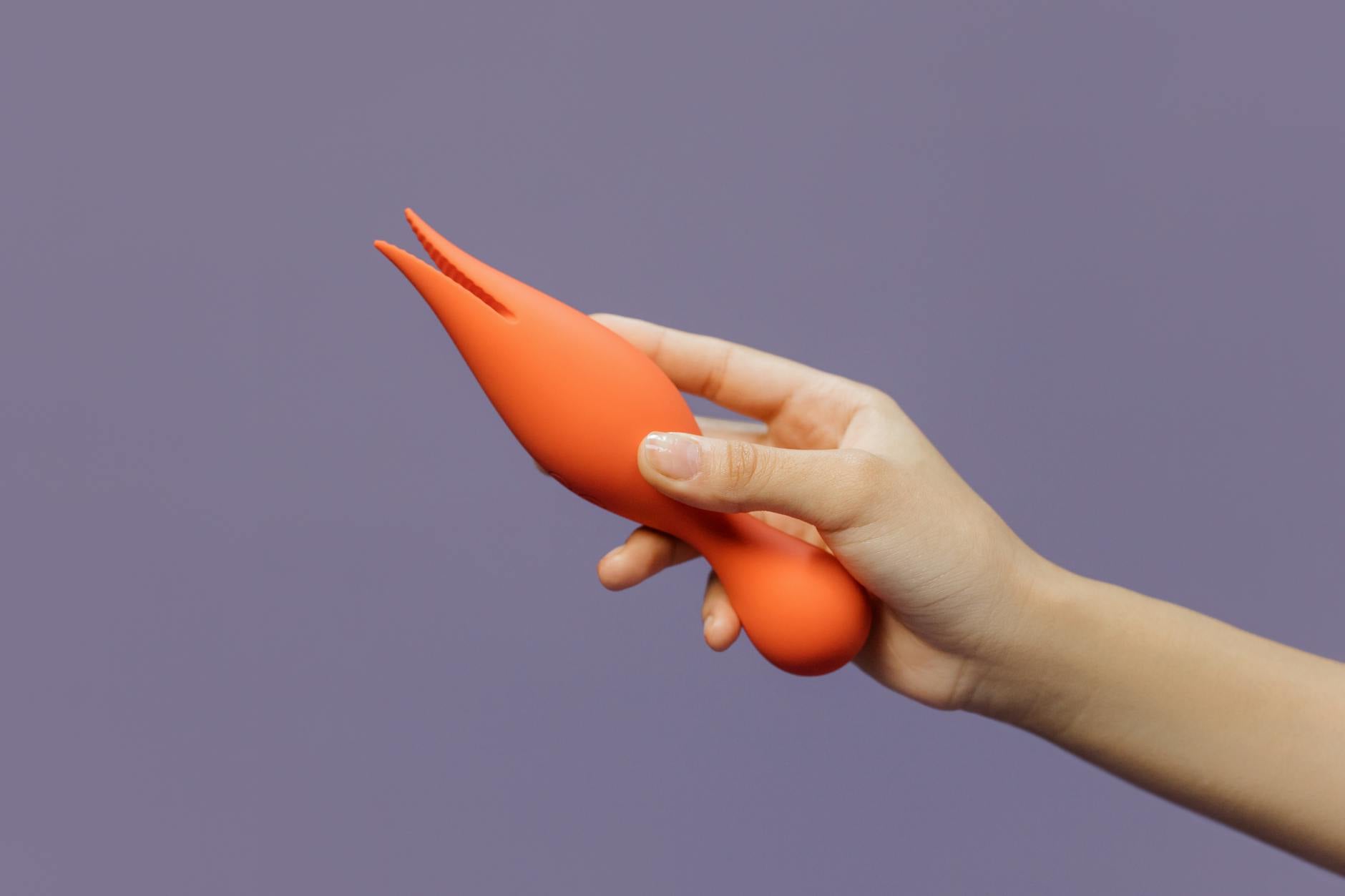
Introducing a tool like a lemon clitoral vibrator into your intimate life doesn't magically solve communication problems. What it does is give your body permission to speak before your mouth has to. That's often the entry point that turns a stalled conversation into a real one.
Why words fail where touch succeeds
Couples therapy has a weird paradox. The people who most desperately need to talk about sex are exactly the people who can't. Shame, cultural conditioning, fear of judgment, past rejections.these things are loud. They drown out intention.
But the nervous system doesn't speak in sentences. It speaks in sensation, in softness, in "yes I want this." When you introduce a lemon vibrator into partnered pleasure, you're shifting the conversation from an intellectual one (which activates anxiety and defensiveness) to a sensory one (which activates connection and curiosity).
Research in somatic psychology shows that embodied experience often precedes verbal understanding. Translation.your body often knows what's good before your brain finds the words to ask for it. A clitoral vibrator creates that embodied experience. Your partner gets to witness your pleasure directly. No interpretation needed. No explanation required.
How to introduce the tool without making it weird
Timing matters here. The worst moment to suggest a lemon vibrator is during conflict or rejection. The best moment is when things are already relatively good.you're both calm, you've had sex recently enough that the topic doesn't feel like an accusation, and you're genuinely curious rather than frustrated.
Start outside the bedroom. "I've been thinking about trying something new. Would you be open to that?" That's it. No apology. No over-explanation. You're not saying your current sex life is broken. You're saying you want to expand it.
If they ask what, you can say: "I looked into lemon clitoral vibrators. They're designed to give really focused stimulation. I want to try one with you and see what happens." Notice you're using "with you," not "instead of you." That distinction matters psychologically.
If they seem hesitant, don't push. Ask what the hesitation is. Often it's not about the toy itself. It's about what they think the toy means. "Does this mean I'm not enough?" "Are you saying sex isn't working?" These are the real questions beneath the surface. Answer those first.
The first time you use it together
Lower the stakes dramatically. You don't need to schedule it like a clinical procedure. You're not performing for each other. You're experimenting.
Start with foreplay that you both already enjoy. Your partner touches you in ways they normally would. Then at some point.maybe five or ten minutes in.introduce the lemon vibrator. Let your partner hold it. Let them control the intensity. This isn't about you taking over and showing them what you need. It's about them discovering what feels good for you through their own exploration.
Pattern 1 or 2 on a lemon vibrator is often perfect for this initial introduction. Low intensity, easy to adjust. You're noticing together: "Oh, that feels different." "I like when you move it slowly." "That rhythm is working." These small observations are conversation. You're talking, but through sensation instead of sentences.
Many couples tell me this experience alone shifts something. Your partner gets tactile evidence of what makes you respond. You get to receive without having to direct. There's less performance anxiety on both sides.
Moving past the first time
After that initial experience, actual verbal communication often becomes easier. You've already crossed the barrier of "we use toys together." The shame of asking has been slightly reduced by the fact that you've already done it.
Now you can reference that experience in conversation. "Remember when I really responded to that pattern on the vibrator?" You've created a shared memory, which is way easier to reference than abstract desire.
For some couples, the lemon vibrator becomes a regular part of partnered sex. For others, it's an occasional thing. Both are fine. What matters is that you've expanded the dialogue beyond words. Your partner now has sensory data. You have permission to be pleased. The conversation has legs.
When communication is blocked by deeper issues
Let me be direct: if your relationship has significant trust issues, infidelity trauma, or ongoing emotional disconnection, a vibrator won't fix it. It might actually expose how stuck things are.
That's not a reason to avoid it. Sometimes couples need professional support first. A therapist trained in emotionally focused therapy or the Gottman Method can help you rebuild safety before you introduce new elements to intimacy. But if you're in a basically solid partnership that's just gone quiet around pleasure, a tool like a lemon clitoral vibrator can absolutely be the thing that opens the door again.
I often suggest that couples think of it this way: you're not bringing in a vibrator because something is wrong. You're bringing it in because you want something. That reframe alone changes how your partner receives the idea.
The conversation after pleasure
Here's what most people get wrong. They use the vibrator, have good sex, and then say nothing. The moment passes. Nothing has actually changed long-term.
Building communication means talking about it afterward. Not in a heavy, clinical way. Just."that was really nice," or "I liked how that felt," or "I want to do that again." You're reinforcing that this experience was good, that asking for pleasure is safe, and that your partner is someone you can be vulnerable with.
These small affirmations compound. Over months, they create a relationship where desire can be named and received. Where your partner can say, "I've been wanting to try something," and you can respond with curiosity instead of defensiveness.
That's the real benefit of introducing lemon sexual toys into a communication-stuck partnership. You're not solving the problem with an object. You're using the object as a bridge to the conversation itself.
FAQ: Communication, Connection, and Tools
Will introducing a vibrator seem like I'm criticizing my partner's performance?
That depends entirely on how you frame it. If you say, "I need this because you're not good enough," yes, it will land as criticism. If you say, "I want to explore something new together," it lands as expansion. The language matters. Avoid "you're not giving me enough" and use "I want to experience this" instead. Focus on what you're adding to your intimate life, not what's missing.
What if my partner feels threatened by a toy?
Threat usually comes from fear that the toy will replace them. Address this directly. "This isn't instead of you. It's alongside you. I want you involved in this." Then make it true. Have them hold it. Let them control the intensity. Make it a collaborative thing, not something you do separately that they have to watch.
How do I know if my partner actually consents versus just tolerating it?
Real consent is enthusiastic and ongoing. "Sure, I guess" is not consent. It's tolerance. If your partner seems hesitant, check in. "You don't seem excited about this. What's actually going on?" True consent means they're genuinely curious, not just doing it to keep you happy. If the genuine curiosity isn't there yet, shelve the idea. It's not a failure. It just means the conversation needs more time.
Can a vibrator fix a sexless relationship?
No. A vibrator can help unlock a conversation in a basically functioning relationship where pleasure went quiet. If your relationship is truly sexless because of deeper incompatibility or unresolved resentment, the vibrator won't restore what's broken. You might need professional support first. A good therapist can help rebuild the foundation that a tool like a lemon clitoral vibrator can then enhance.
What if we try it and it doesn't work?
That's data, not failure. Sometimes couples try something new and it doesn't click. That's okay. What matters is that you tried together and communicated about it. The conversation itself is the win, not necessarily the outcome. You can always try again later, try something different, or stick with what you had before. The point is you're both aware now that expanding intimacy is possible.
How often should we use it if we try it?
There's no right answer. Some couples use a lemon vibrator most times they have sex. Others use it occasionally. The key is that it stays collaborative and desired by both of you, not obligatory. Check in regularly. "Are you still enjoying this?" "Do you want to keep doing this?" The moment it becomes "we have to use the toy," it stops being an enhancement and becomes another form of pressure.
The real work starts after the toy
Lemon clitoral vibrators are a beautiful tool for couples who love each other but have lost the thread of sexual communication. They create embodied conversation. They give permission. They make pleasure something you can witness together.
But the real work is the talking that comes after. Noticing what worked. Asking for more. Building a relationship where desire can be named without shame. That's what transforms not just your sex life, but your entire partnership. The vibrator is just the bridge. You have to walk across it together.
If communication feels stuck, that might be worth exploring with a professional. And if you want to try expanding intimacy alongside better communication, a tool designed for this.like a lemon vibrator.can be exactly the permission slip your body needs.