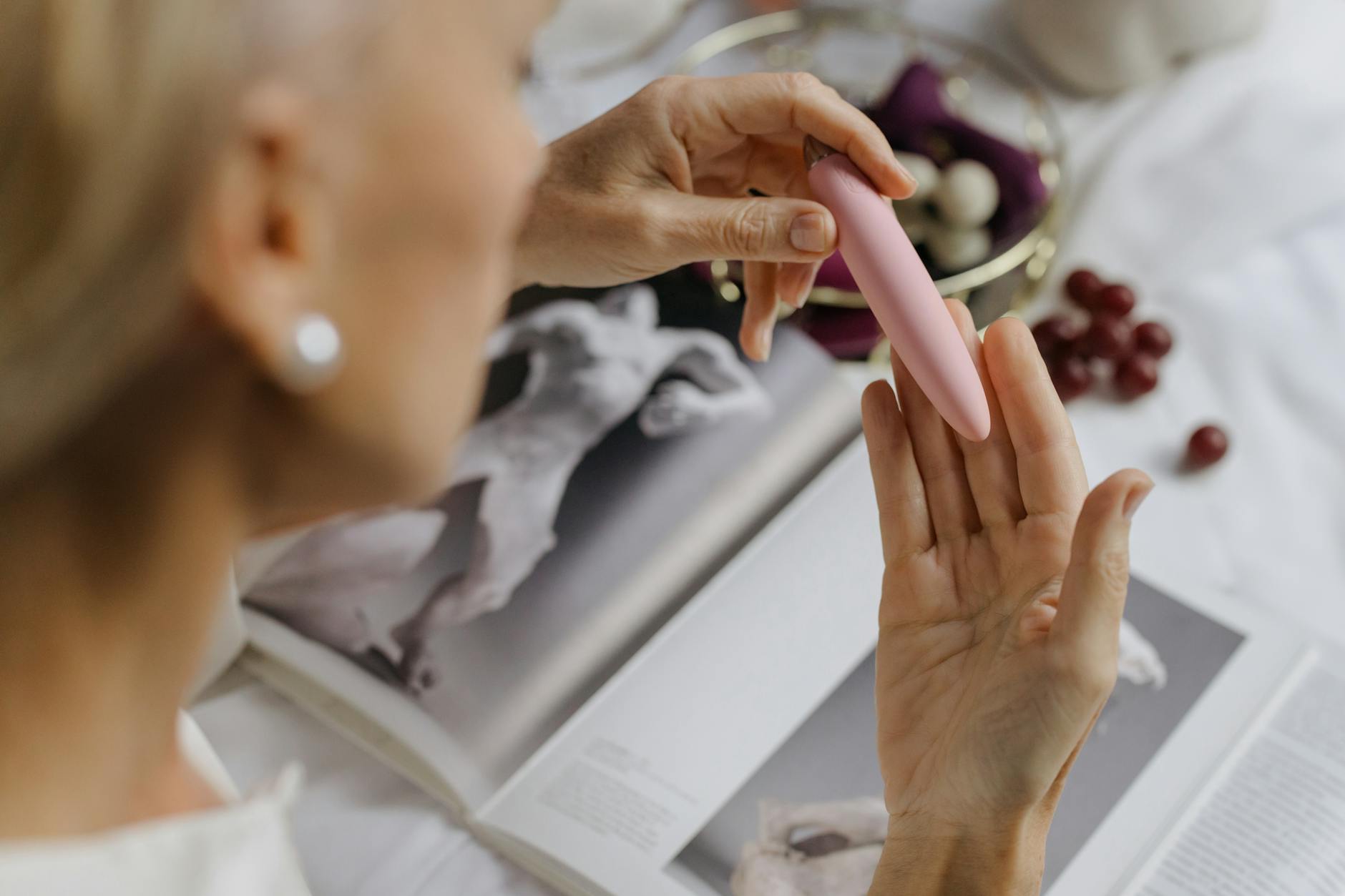
Let's talk about the part nobody mentions
Surgery interrupts pleasure. It doesn't end it. Whether you've had a hysterectomy, fibroid removal, endometriosis treatment, abortion care, or any gynecological procedure, the conversation usually stops at "no penetration for six weeks." Then silence. Nobody tells you what happens after those six weeks, or how to think about pleasure while you're healing, or whether devices like lemon vibrators are even on the table.
They are. And the timing matters more than you think.
Medical clearance comes first, always
Before anything else, you need explicit clearance from your surgeon or gynecologist. Not a text to a nurse. Not an assumption. A specific conversation: "I want to use external clitoral stimulation as part of my recovery. What's the timeline?"
Here's why this matters. Different procedures have different healing windows. A D&C looks nothing like a hysterectomy in terms of tissue recovery. Laparoscopic surgery differs from open surgery. Some surgeons clear external stimulation at two weeks. Others say six. A few say eight or twelve.
If you don't ask, you're guessing. And guessing while healing is how complications happen.
When you do ask, have the specifics ready. Tell them you're thinking about using a non-penetrative device like a clitoral vibrator. Most modern gynecologists are unfazed by this. If yours isn't, you might consider whether they're the right care provider for this stage of your recovery.
What's actually happening in the healing window
Your surgeon closed tissue. That tissue is rebuilding blood supply, nerve connections, and structural integrity. The first two weeks are the highest-risk period. Anything that increases blood flow, strains the area, or introduces infection risk is off the table.
Weeks three through six, most of the visible healing is done, but deep tissue is still reorganizing. Your body is knitting together what was separated. This is when external stimulation becomes possible for many people, but it depends on your procedure and your individual healing.
After six to eight weeks, most soft tissue has restored its basic function. Nerve endings are reconnecting. But your body is still in recovery mode, which changes what pleasure feels like.
Many people notice that sensation feels different post-surgery. The clitoral area might be more or less sensitive. The pelvic floor might feel tight or unstable. Arousal might take longer to build. This is normal and usually temporary, but it's worth expecting so it doesn't feel like something is broken.
Why lemon clitoral vibrators work well during recovery
Here's the practical part. Lemon suction toys offer something that other vibrators don't: they stimulate through gentle pressure rather than direct friction. This matters during recovery because it means less mechanical stress on healing tissue and pelvic floor muscles.
When your surgeon says no penetration, they mean internal pressure and stretching. External clitoral stimulation doesn't involve that. But not all external stimulation is equal. A traditional vibrator applies direct friction that can feel too intense on newly healed tissue. Suction, by contrast, creates a gentle pulse and vacuum that many people find easier to tolerate while recovering.
The other advantage is control. You can start at the lowest setting and stay there. With lemon vibrators, the suction pressure is incremental, which means you can work at the level your body actually needs right now, not the level you're used to.
When to start and how to do it safely
Once you have clearance, begin conservatively. This isn't the time to prove anything to yourself.
Start with the lowest setting only. If your lemon vibrator has five settings, spend a full week on setting one. Pay attention to how your body responds over the next 24 to 48 hours. Are you sore? Is there unusual cramping? Any bleeding or discharge beyond what's normal for your recovery stage? If any of those yes, you went too fast.
Focus on external stimulation only. No internal fingers, no internal anything. Your surgeon cleared you for external work for a reason.
Keep sessions short. Ten to fifteen minutes maximum at first. Your nervous system is still in recovery mode, and a gentle 10-minute session does something real for your sense of continuity and self. It doesn't have to be an endurance test.
Use plenty of lubricant even though external work doesn't require it the way penetration does. During healing, tissue can be dry from hormone changes and immobility. A water-based lube makes everything more comfortable and reduces friction.
The emotional layer most people skip
Physical healing is half the story. Psychological recovery from surgery is the other half, and they're weirdly connected when it comes to pleasure.
Many people feel disconnected from their bodies post-surgery. Your body was opened, altered, stitched back together. That's real trauma, even when it was necessary and chosen. It takes time to trust your body again, to feel ownership over it, to want sensation from it.
Using a lemon vibrator isn't just about orgasm. It's about reclaiming agency. It's about saying, "My body is mine. Pleasure is mine. Recovery includes this." That's not frivolous. It's part of healing.
Some people feel guilt about wanting pleasure during recovery. Like healing should be austere and patience should be silent. It shouldn't be. Your body healed in order to feel good again. Pleasure, in measured doses, is part of that reclamation.
If you have a partner, communicate what you need during this phase. "I want to reconnect with my body" is different from "I want penetrative sex" and deserves a different conversation. Your partner can support your recovery by being present without expecting anything in return.
Red flags that mean you need to pause
Bleeding beyond your normal post-op spotting. Pain that increases after 24 hours. Fever. Any sign of infection. Cramping that doesn't resolve within an hour of use. Unusual discharge or odor.
These are pause signals. Not permanent stop signals, but "talk to your surgeon before continuing" signals. Your body is giving you information. Listen to it.
Also pause if pleasure feels forced or like you're performing recovery correctly. You're not supposed to feel a certain way. Some people feel immediate interest in returning to pleasure. Others take months. Both are normal.
Moving forward after the first few weeks
After two to three weeks of consistent low-level use, most people can gradually increase intensity if their body is ready. But gradually means actually gradually. Move to setting two after a week. Stay there for another week. Notice how your body responds.
By six to eight weeks, most people can return to their baseline pleasure patterns, though sensation might feel different for a while. That's okay. Your pelvic anatomy has changed. Your nervous system has reset. Give yourself time to rediscover what works.
If you're working with a partner, you're also rebuilding a shared rhythm. That takes longer than physical healing. Some couples find that using a lemon vibrator together during early recovery helps rebuild trust and intimacy in a way that feels safe and bounded.
One more thing: recovery isn't linear. Some days you'll feel great. Some days you'll feel tender. Both are normal. A lemon clitoral vibrator can be part of your recovery toolkit, but it's not a measure of whether you're healing correctly. You are. Your body knows what to do.
Your healing includes pleasure. Not instead of caution, but alongside it.
FAQ: Recovery and Intimacy With Lemon Vibrators
Can I use lemon vibrators immediately after surgery?
No. You need explicit clearance from your surgeon first, which typically takes two to six weeks depending on the procedure. Using a vibrator before the initial healing window closes can compromise tissue repair and introduce infection risk. Always ask your care provider specifically about external clitoral stimulation timing before you try anything.
What if my surgeon says no vibrators at all?
Then you listen to your surgeon. Different surgeons have different protocols based on their experience and your individual healing. If you're uncomfortable with their answer, you can ask for a second opinion or ask what specifically they're concerned about, but don't override their medical judgment. Recovery matters more than this moment.
How do I know if pain during recovery is normal versus a problem?
Soft, manageable cramping is normal. Sharp pain, pain that worsens hours after use, or pain that doesn't resolve within an hour is a problem. So is any unusual bleeding. When in doubt, message your surgeon's office. They'd rather hear from you than have you guess and complicate your recovery.
Can I have partnered intimacy while recovering?
That's a conversation with your surgeon about what type of intimacy and when. General rule: if your surgeon cleared external stimulation, partnered external stimulation is usually fine too. Penetration is off the table until you get that specific clearance. Oral sex depends on the type of surgery. Ask directly.
What if I feel guilty about wanting pleasure during recovery?
That's incredibly common and completely normal. Your body was altered. You're grieving that, even if the surgery was necessary. Wanting pleasure isn't disrespectful to your healing. It's part of reclaiming your body as yours. If guilt persists, talking to a therapist who specializes in body autonomy can help.
How long until pleasure feels normal again?
It depends on the surgery, your body, and your psychology. Physical healing is one timeline. Emotional and sensory recovery is another. Most people feel mostly normal within three months. Some take six. A few need longer. There's no rushing this.
The path forward
Your pleasure matters, and it's worth protecting while you heal. That means getting clearance before you explore. It means starting slowly and listening to your body. It means recognizing that recovery includes sensation and sensation includes you.
Lemon vibrators aren't a shortcut to feeling normal again. They're one tool for rebuilding your sense of ownership over your body during a time when that ownership might feel shaky. Use them thoughtfully, use them cautiously, and use them as part of your recovery, not instead of it.
If you have questions about your specific recovery or want to talk through what safe return to pleasure looks like for you, reach out. We're here to help navigate the parts of recovery that doctors don't usually discuss.