Let's talk about the thing nobody wants to admit
When erectile dysfunction shows up in a relationship, the first casualty is usually honesty. You both get quiet. You stop initiating. Sex becomes a performance test instead of a connection, and the pressure builds until one or both of you just... stops trying.
Here's what I've learned from decades of working with couples: ED is not the end of intimacy. It's actually a doorway to something deeper, if you're willing to walk through it differently.
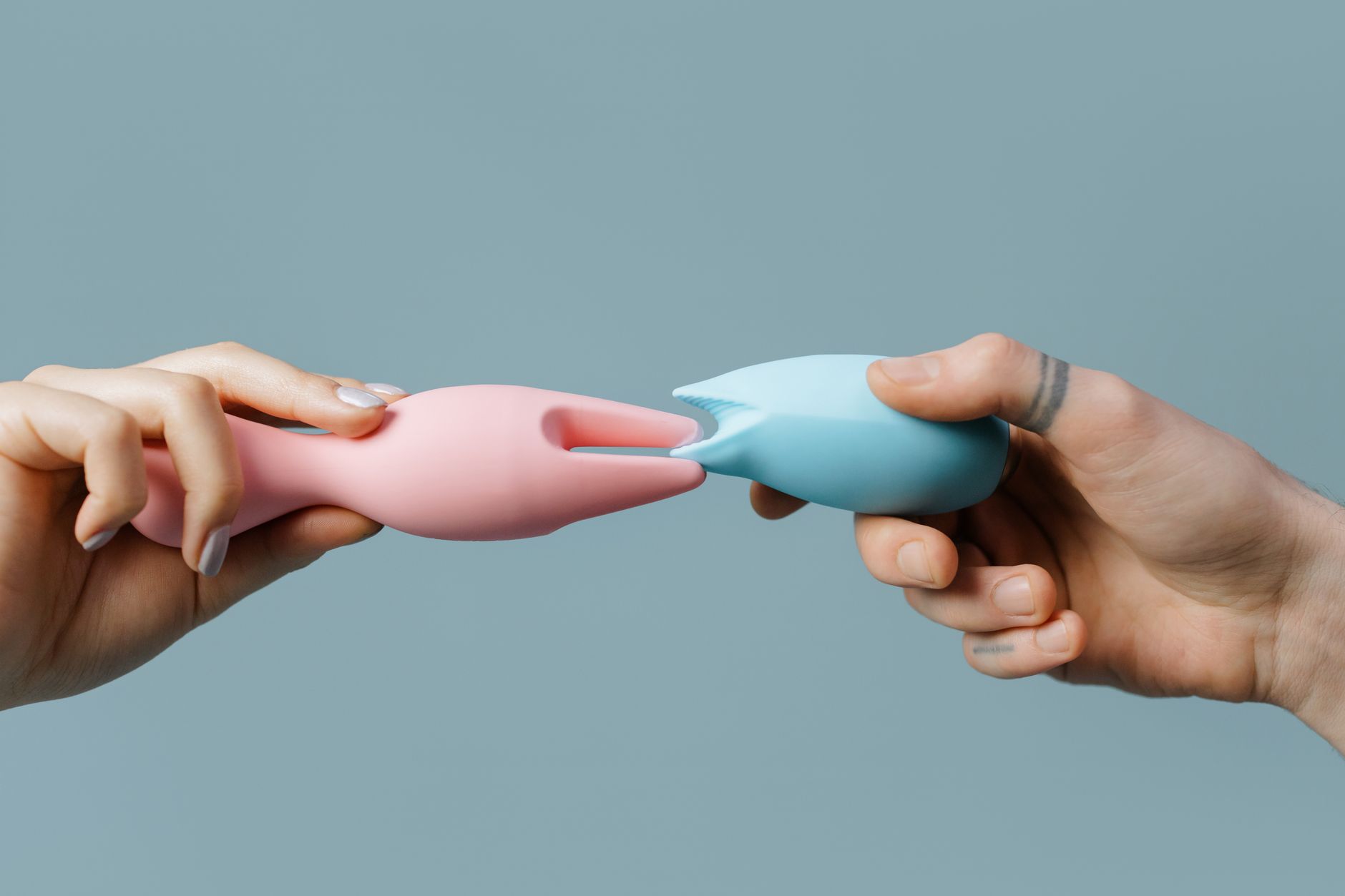
Lemon clitoral vibrators, specifically, can be the tool that changes the entire conversation. Not because they fix ED. But because they remove the pressure that makes everything worse, and they put pleasure back where it belongs: on you.
Why pressure is the real problem
Erectile dysfunction has a feedback loop. Your partner struggles to stay hard. You both feel it. Suddenly, sex becomes about proving he can still perform, and your pleasure becomes secondary to his anxiety. He loses confidence. You lose desire. The cycle tightens.
What lemon clitoral vibrators do is break that cycle by refocusing the equation. Instead of "Will this lead to penetration?" the dynamic becomes "What feels good for you right now?" That shift in attention can transform an anxious, mechanical experience into something intimate again.
The reason this works isn't magical. It's practical. When a partner with ED sees that pleasure can happen independently of his erection, the psychological weight lifts. You're not waiting for him to perform. You're both exploring what actually works.
How to introduce it without making it weird
Timing and framing matter enormously here. You're not saying "We need to fix this." You're saying "I want to try something that feels good for me." That's the difference between problem-solving and pleasure-seeking.
Start outside the bedroom. Mention it during a non-sexual conversation. "I've been curious about lemon vibrators. I think I'd like to try one. Would you be interested in being there when I do?" This works for three reasons. First, it removes the surprise and shame spiral. Second, it centers your pleasure as the point, not his dysfunction. Third, it gives him permission to not be the only source of arousal.
When you actually use it together for the first time, go slow. You might start with him watching while you explore on your own. That's not foreplay in the traditional sense. It's you demonstrating that you know what you want and that pleasure is possible for you independently. That's powerful for him to witness.
Some couples find that once he sees you with a lemon vibrator and feels the freedom that creates, he becomes more interested and more able. That's not because the toy fixed him. It's because the pressure evaporated.
What to actually do once you're in bed
If he's inside you (whether fully hard or partially), a clitoral vibrator changes what's possible. The stimulation isn't dependent on his thrusting or his erection angle. You're managing your own arousal, which means he can focus on sensation instead of performance. This alone can help him relax enough to stay engaged longer.
If he's not hard enough for penetration, a lemon vibrator opens doors that usually close in this situation. You can have really satisfying sex that doesn't involve his penis at all. He can be inside your thighs, against your vulva, or just present and intimate while you use the vibrator. All of those are real sex. All of those feel good.
One thing I recommend: let him control the vibrator sometimes. Not all the time. But when he's holding a lemon clitoral vibrator and using it on you, it shifts the dynamic from "I can't perform" to "I can create pleasure for you." That's a different neurological state entirely. He's engaged in your pleasure actively, which often helps with relaxation and confidence.
The conversation underneath the conversation
If you've been together a long time when ED shows up, there's usually something else happening underneath. Stress, resentment, disconnection, aging, health issues. Sometimes ED is purely physiological. Often it's layered.
Using a lemon vibrator is genuinely helpful, but it's not a substitute for talking about what's actually happening in your relationship. Is he stressed at work? Has intimacy felt one-sided? Are you both exhausted? Are there unresolved conflicts that have made sex feel unsafe or obligatory?
Those conversations are harder than introducing a toy. But they're necessary. A vibrator can help you reconnect and remove pressure, but it can't solve deep relationship disconnection on its own.
Medical stuff matters too
ED can be a sign of vascular issues, hormonal imbalance, medication side effects, or other treatable conditions. If he hasn't seen a doctor about it, that's the first step. Not every case of ED needs medication, but many do, and the conversation with a GP or urologist is worth having before assuming it's psychological.
There are also topical treatments, devices, and other options that work really well and are way less awkward than people think. A good doctor will ask the right questions and not judge.
Using lemon clitoral vibrators and getting medical support aren't competing strategies. They work together.
When ED is part of a bigger picture
Sometimes ED shows up alongside depression, grief, major life changes, or other things that affect everything. If that's the case, the vibrator isn't the issue. Getting support is. A couple's therapist who specializes in sexual health can help you navigate both the emotional and physical pieces without shame.
Your pleasure matters in that picture too. You don't have to put your needs on hold while he figures things out. A lemon vibrator is one way to keep that part of you alive and engaged while you're both working through whatever else is happening.
The bigger shift
What I've noticed with couples who move through ED successfully is that they end up with a more honest, creative sex life than they had before. The pressure to perform a specific script disappears. You both get curious about what actually feels good instead of what you think is supposed to happen.
That's not a consolation prize. That's an upgrade.
FAQ: Your questions answered
Will using a vibrator make him feel worse about his ED?
It depends on framing and communication. If you introduce it as "I want more pleasure" instead of "You're not enough," most partners feel relieved. The pressure lifts for him too. He doesn't have to carry the entire weight of your pleasure. But this only works if you actually talk about it first. Surprise vibrators often backfire when ED is already a sore spot.
Can we use a lemon vibrator during penetration even when he's having trouble with erections?
Absolutely. If he's partially hard, penetration is still possible for many people, and adding clitoral stimulation with a vibrator makes the experience much more satisfying for you. If he's not hard enough for penetration, you can still be intimate in other ways while you use the vibrator. Pleasure doesn't have a single pathway.
What if he refuses to let me use a vibrator because he feels threatened?
That's a relationship conversation, not a vibrator conversation. His insecurity about a toy is telling you something about his anxiety, shame, or beliefs about what sexuality should look like. Those are real feelings, and they deserve to be addressed. That said, your pleasure matters. If he's not willing to work on his defensiveness, that's a different problem than ED.
How do I know if ED is psychological or physical?
You don't, and honestly, it doesn't matter that much for your purposes. Both need attention. Physical ED often has an emotional component once the anxiety kicks in. Psychological ED can reveal underlying health issues. A doctor can help sort the physical piece. A therapist can help with the emotional piece. Often both are in play.
Is it normal for ED to come and go?
Very normal. Situational ED (it happens sometimes, not all the time) is incredibly common and usually tied to stress, fatigue, alcohol, or anxiety in the moment. Performance anxiety often makes it worse. If it's occasional, a lemon vibrator actually helps because it removes the pressure that often triggers it in the first place.
Should we explore other positions or toys if penetration isn't working?
Yes. The sooner you both normalize that penetration is one option among many, the better. Some positions work better when he's not fully hard. Some don't require him to be hard at all. Lemon clitoral vibrators, hands, mouths, bodies pressed together. Pleasure has options. The more you both embrace that, the less ED controls your sex life.
The real takeaway
Erectile dysfunction is disruptive, and I'm not going to pretend it's not. But it's not a life sentence. It's not a sign that your sexual relationship is over. It's a detour that, if you navigate it with honesty and creativity, can actually bring you closer.
A lemon vibrator is one tool in that navigation. What matters more is the willingness to talk about what's happening, to remove shame from the conversation, and to remember that pleasure is possible in forms you might not have explored yet.
If you're both willing to be curious instead of defensive, ED can be the moment your sex life actually gets better, not worse. I've seen it happen. It starts with something small. A vibrator. A conversation. A willingness to try something different.
The rest follows.