Let's talk about the thing nobody wants to say out loud
Introducing toys into partnered sex feels risky. You're worried your partner will think you're not satisfied. Or that bringing it up means you've been fantasizing about someone else. Or that they'll feel replaced, inadequate, or like they're not enough. And honestly? Those are real concerns. They deserve a real answer.
Here's what I know after decades of working with couples: the shame around toys almost always comes from terrible timing and zero framework. You bring up a vibrator when you're frustrated, or in the moment when things aren't working, or casually during an argument. That's how it becomes a referendum on your partner's adequacy instead of what it actually is: a tool that makes your body feel better.
Why the framing matters more than the toy itself
This is the central insight from attachment theory and decades of couples research. The way you introduce something matters infinitely more than the thing itself. A clitoral vibrator presented as "I want us to have more fun together" lands completely differently than "I need help getting off."
One is collaborative. One is a complaint.
Your partner's reaction hinges almost entirely on whether they feel like you're including them in something pleasurable, or whether they feel like you're pointing out a problem they can't solve. That distinction is everything. So let's be strategic about how you set this up.
Before you say anything: do your own homework first
Here's what I tell couples: don't announce the toy. Normalize it first.
Talk about pleasure in general. Talk about what you like, what's shifted for your body, what you'd like to explore together. Maybe you've read something about how clitoral vibrators work and found it interesting. Maybe you noticed that partnered sex sometimes leaves you wanting more, and you're curious about mixing things up. Ground it in positive curiosity, not in deficit.
Then, separately, mention that you're thinking about trying a toy. Not as a crisis or a solution, but as an experiment. Something you want to do together, not instead of what you already do.
This reframes the entire conversation. You're not complaining. You're inviting.
The actual conversation: what to say and when
Timing is everything. Not during sex. Not after sex when someone's vulnerable. Not during an argument. Have this conversation the same way you'd discuss trying a new restaurant. Calm, curious, unrushed.
Start with what you appreciate. "I love what we do together" or "I've been really happy with our sex life." Then add what you want to explore. "I've been thinking about trying a clitoral vibrator. I think it could feel really good for me, and I'd like us to explore it together."
That's it. You're not asking permission. You're inviting collaboration. There's a difference.
If they seem hesitant, don't defend. Ask what they're worried about. Listen to the actual fear underneath, not just the surface words. "That's a lot to take in" might mean "I'm worried you won't want me anymore." Address that. "I want more pleasure, and I want you here with me while I have it." That's different from "The vibrator is replacing you."
What lemon clitoral vibrators actually bring to partnered sex
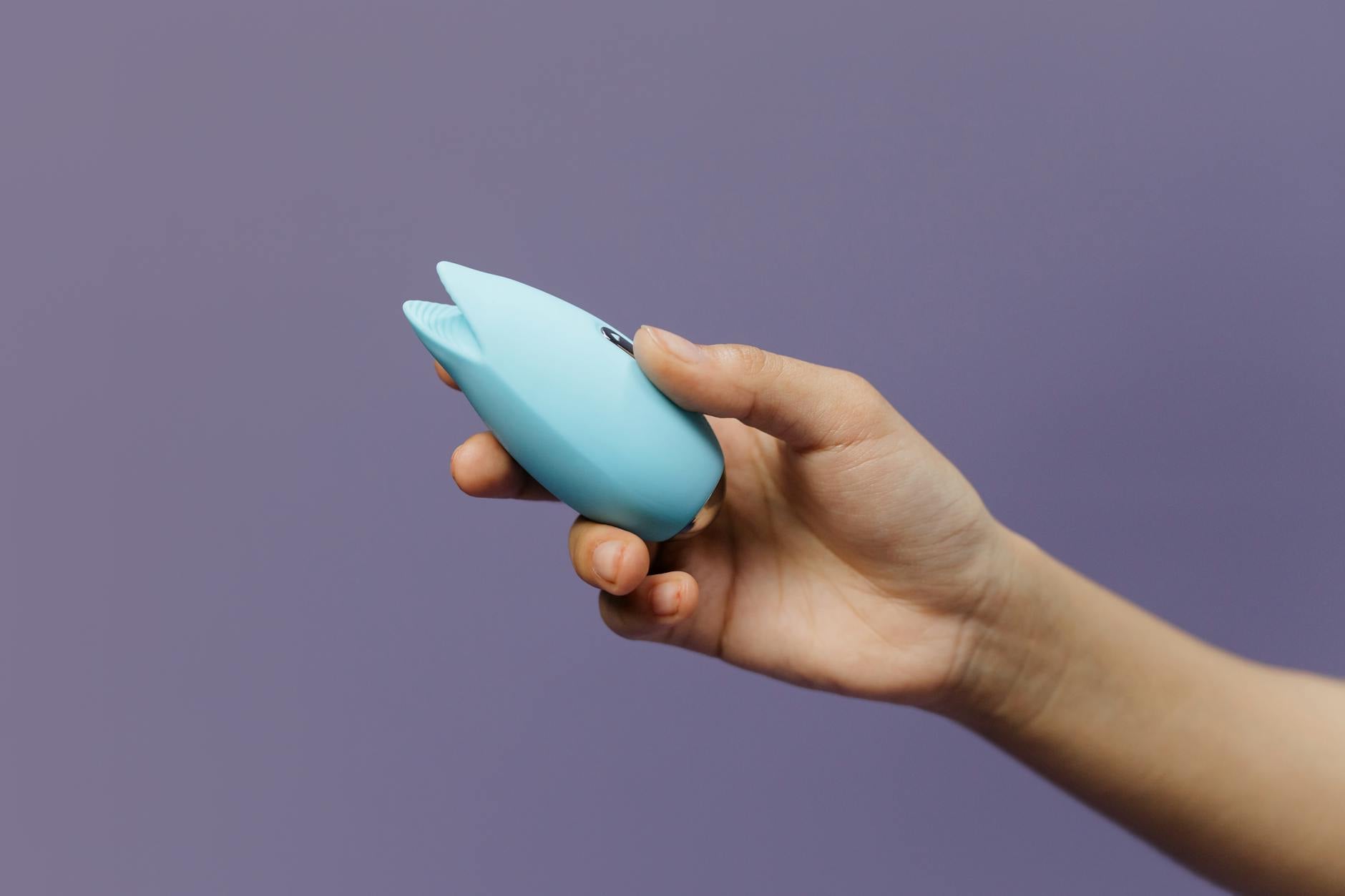
Let's be concrete about why this matters. A Lemon clitoral vibrator isn't about bypassing your partner. It's about creating a different kind of sensation than fingers or penetration can offer. Suction-based stimulation works differently than friction. It's more concentrated, more sustained, harder to get distracted from.
That changes what's possible. You might be able to relax more. You might get to orgasm more reliably. You might explore sensations you've never accessed before. And your partner gets to witness that. To participate in it. To feel what happens when you're fully present with pleasure.
That's not replacing them. That's inviting them into something deeper.
How to actually use it together: the practical stuff
Start outside the bedroom. Literally. Show your partner the toy. Let them hold it. Show them how the settings work. Demystify it. Answer their questions without judgment.
Then, when you're ready to use it during partnered sex, talk through what you want. "I'd like to try this while you're touching me" or "I want to use this while you're inside me" or "I want to focus on this for a bit and have you watch." Specificity removes anxiety.
Start slow. Use a lower setting. Let your body adjust to the new sensation. Your partner can help by staying present. They can touch you elsewhere. They can kiss you. They can tell you what they notice. The toy isn't their replacement. It's a new element in a familiar dance.
And here's the thing: if it works for you, if you have an orgasm you couldn't have had otherwise, that's a win for both of you. Your partner gets to be part of you having more pleasure. That's actually incredibly connecting if you frame it right.
When it doesn't land the way you hoped: troubleshooting
Sometimes your partner will feel awkward the first time. Or they'll worry about whether they're doing the right thing. Or the whole experience will feel weird because you're both nervous.
That's normal. You're introducing something new. Of course it's awkward.
Don't abandon it after one try. Give yourself permission to experiment. Maybe the first time is weird, the second time slightly less so, and by the fourth or fifth time it actually feels natural. That's how new things work.
If your partner remains genuinely uncomfortable, that's different. That requires a separate conversation about what's underneath the discomfort. Is it shame? Worry about adequacy? A mismatch in sexual values? Those are real issues that deserve real solutions. A toy won't fix them. But a conversation with someone trained in couples work might.
The deeper thing this conversation is actually about
Introducing a toy into your partnered sex life isn't really about the toy. It's about whether you can ask for what you want without shame. Whether your partner can hear a request for more pleasure as something that includes them, not excludes them. Whether you can both hold the idea that individual pleasure and partnered pleasure aren't in competition.
That's the real work. The lemon clitoral vibrator is just the vehicle.
When you can say "I want more sensation" and your partner can hear "I want to explore this with you" instead of "You're not enough," something shifts. You're not just having better sex. You're practicing being more honest with each other. That's what sustainable intimacy actually is.
FAQ: The questions people actually ask
Will introducing a vibrator make my partner feel inadequate?
Not if you frame it right. The risk isn't the toy itself. It's introducing it as a solution to a problem your partner didn't know existed. That's why the homework matters. Talk about pleasure and curiosity first. Make the toy an addition to what you already do, not a replacement for what isn't working. Your partner's feelings matter. So does your pleasure. You can hold both.
How do I know if my partner will be open to this?
You don't, fully. But you can look for signs. Do they ask about your pleasure? Do they seem curious about your body and what you like? Do they respond well to feedback? Those are good indicators. And honestly, the only way to find out is to have the conversation. You might be surprised.
Should I ask permission or just do it?
Ask, but ask as an invitation, not a question seeking approval. "I'd like to try this" is different from "Is this okay?" One assumes you have agency over your own body. The other asks your partner to police it. You get to explore your own pleasure. The collaboration is about how, not whether.
What if my partner wants to use a toy on me but I'm not sure I want that?
That's completely valid. You can set boundaries. "I want to try it solo first" or "I want to use it myself while you're with me, but I'm not ready for you to control it yet." Pleasure isn't about obligating yourself to anything. It's about what actually feels good to you.
Can lemon vibrators work during penetration?
Yes. The external nature of clitoral vibration means you can use it while your partner is inside you. Some people find this creates a fuller sensation. Some find it too much. Find out what works for your body and communicate that clearly.
What if we try it once and it doesn't feel good?
That's data, not failure. Maybe the setting was too high. Maybe the timing wasn't right. Maybe you needed more warm-up. Give yourself multiple attempts before deciding it's not for you. And remember that your partner's comfort matters too. You might find a rhythm that works better with communication and practice.
The real outcome you're after
The goal here isn't to have the perfect toy experience. It's to build the capacity to ask for what you want without shame, and for your partner to hear requests for your own pleasure as something they can be part of, not excluded from. That's the relationship infrastructure that makes everything else possible. The lemon clitoral vibrator is just the excuse to build it.
If you need more support navigating these conversations, we're here to help. Reach out at /contact with questions or concerns about introducing toys into your relationship.
Sources and further reading
Gottman, J. M., & Silver, N. (2015). The Seven Principles for Making Marriage Work. Harmony Books.
Perel, E. (2018). Mating in Captivity: Reconciling the Erotic and the Domestic. HarperCollins.
Emmers-Sommer, T. M., & Koerting, C. (2020). Communication, perception, and satisfaction with sexual intimacy: A longitudinal study. Sexual and Relationship Therapy, 35(2), 234-250.